
The surface of an artwork.
A record of its character.
Explore how registration and subsequent comparison work. These illustrations explain the process; they do not show measurements or test results for the artworks pictured.
We identify the individual artwork.
Through the features of its surface.
Secured.Art records the features of selected areas of an artwork as a digital fingerprint. A later capture is compared with this reference to check whether it is the same physical object.
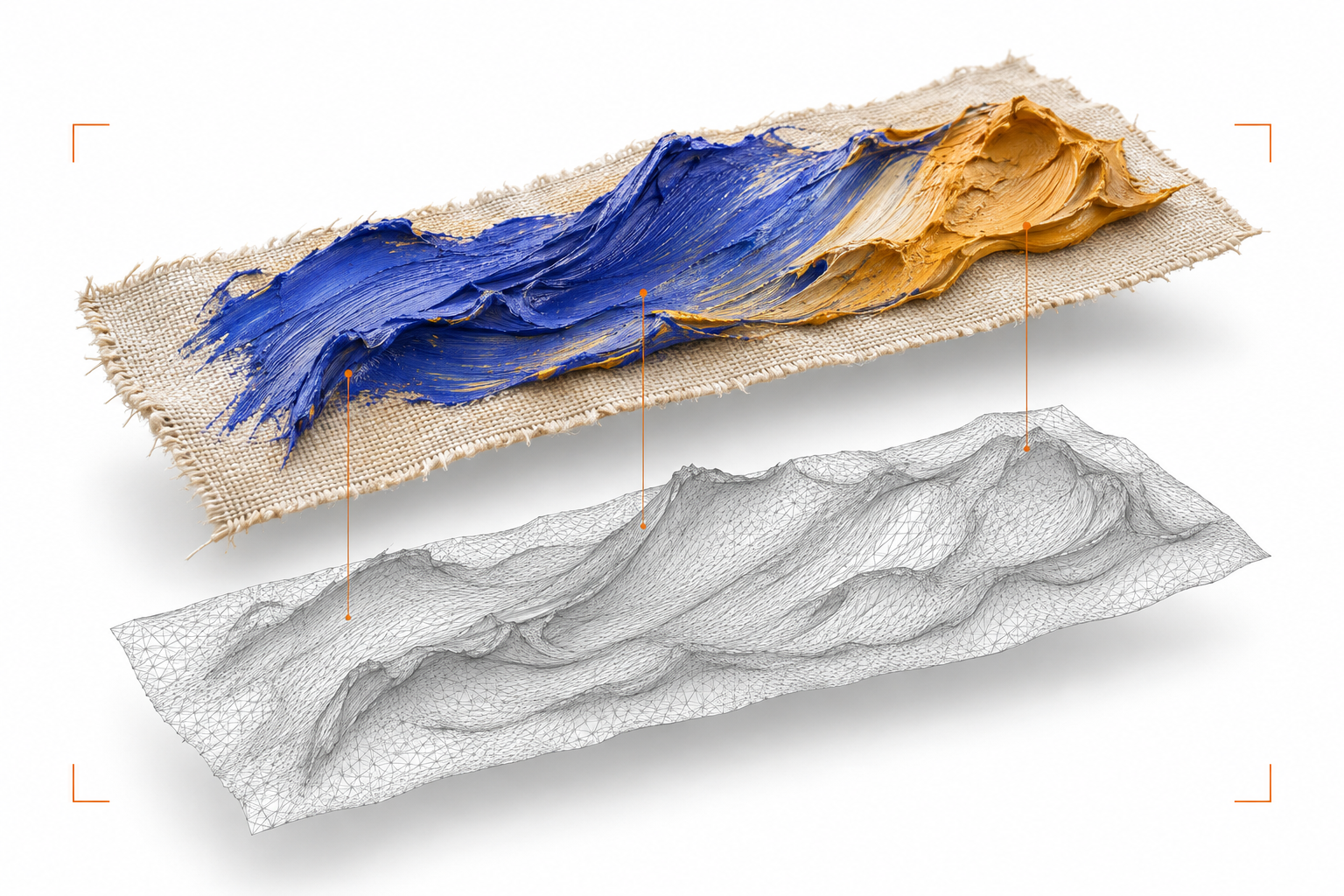
Surface capture is part of what the system does. You gain a reference for an individual artwork — linked to its record, documentation and history.
SURFACE FINGERPRINT RECORD COMPARISONWe capture the features of the physical artwork.
The Register app guides you through capturing selected areas of the surface. Their structure and the quality of the captured images provide the basis for a later comparison.
We create the artwork’s digital fingerprint.
The system describes the distinctive pattern of features on the captured surface. This creates a reference record against which a later capture of the object can be compared.
We connect the record to the right artwork.
The digital fingerprint is linked to the artwork’s unique ID. Its Collector record and the PRO Certificate, issued for the relevant scope, refer to the same artwork registration.
We check whether it is the same physical artwork.
During a subsequent capture, Secured.Art compares the recorded features with the stored reference. The result concerns the physical object’s consistency with that reference, within the scope of the procedure performed.
The animation illustrates how the process works. The lines and points are schematic and are not test results for the artwork shown.
Documentation connected
to an individual artwork.
When buying, lending or transferring a work, you can return to its record and compare the physical artwork again. Its history in Collector and the scope of its PRO Certificate remain linked to the same object.
Every result has a clearly defined scope.
A comparison may indicate a match, a mismatch, the need to repeat a capture or further expert assessment. If the available images do not allow a conclusion, further assessment is needed.
Explore the scope of identificationDifferent surfaces.
One purpose: identification.
Paint layers, canvas weave, paper fibres or tool marks on a sculpture: the material determines which features can be captured and how to capture them. The procedure must be adapted to each surface.
The microstructure of a seemingly smooth surface.
Even a surface that looks uniform from a distance may contain small irregularities and features of the underlying material. Their pattern underpins the concept of recording an individual physical artwork.
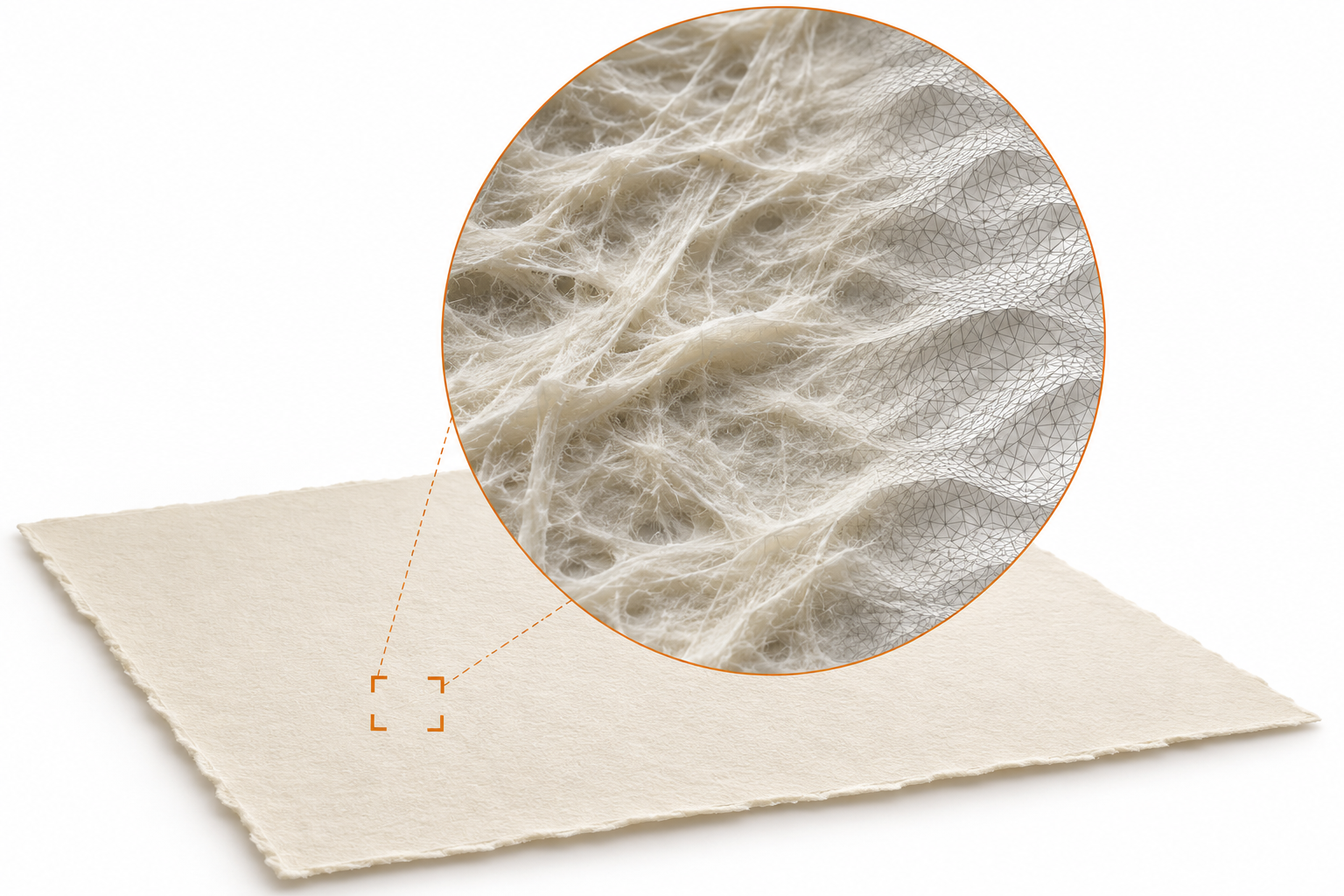
Illustrations of potential development directions. Supported materials and capture conditions require validation for the method used.
Answers before you begin.
How does an artwork record help protect a work?
Linking documentation to a physical object creates a reference for a later comparison of its surface. The NFC TAG identifies the artwork and links to its record; its tamper-destructible construction is damaged if someone tries to peel it off. The identification scope is set out in the procedure and the PRO Certificate.
Does “add value” mean the artwork’s price will rise?
It means preserving documented history, sources and information connected to an individual artwork. Market value also depends on the artist, condition and demand. Registration does not promise an increase in value.
Let’s talk
about your art.
Choose a service and tell us what you need. Your message can include a visit plan, selected products or questions about managing your collection. We will agree the timing and service details before you place an order.
contact@secured.art